The countdown to the opening of the Greater Bridgeport Symphony’s new era is underway, with novel programing and ambitious objectives set for its 80th anniversary season.
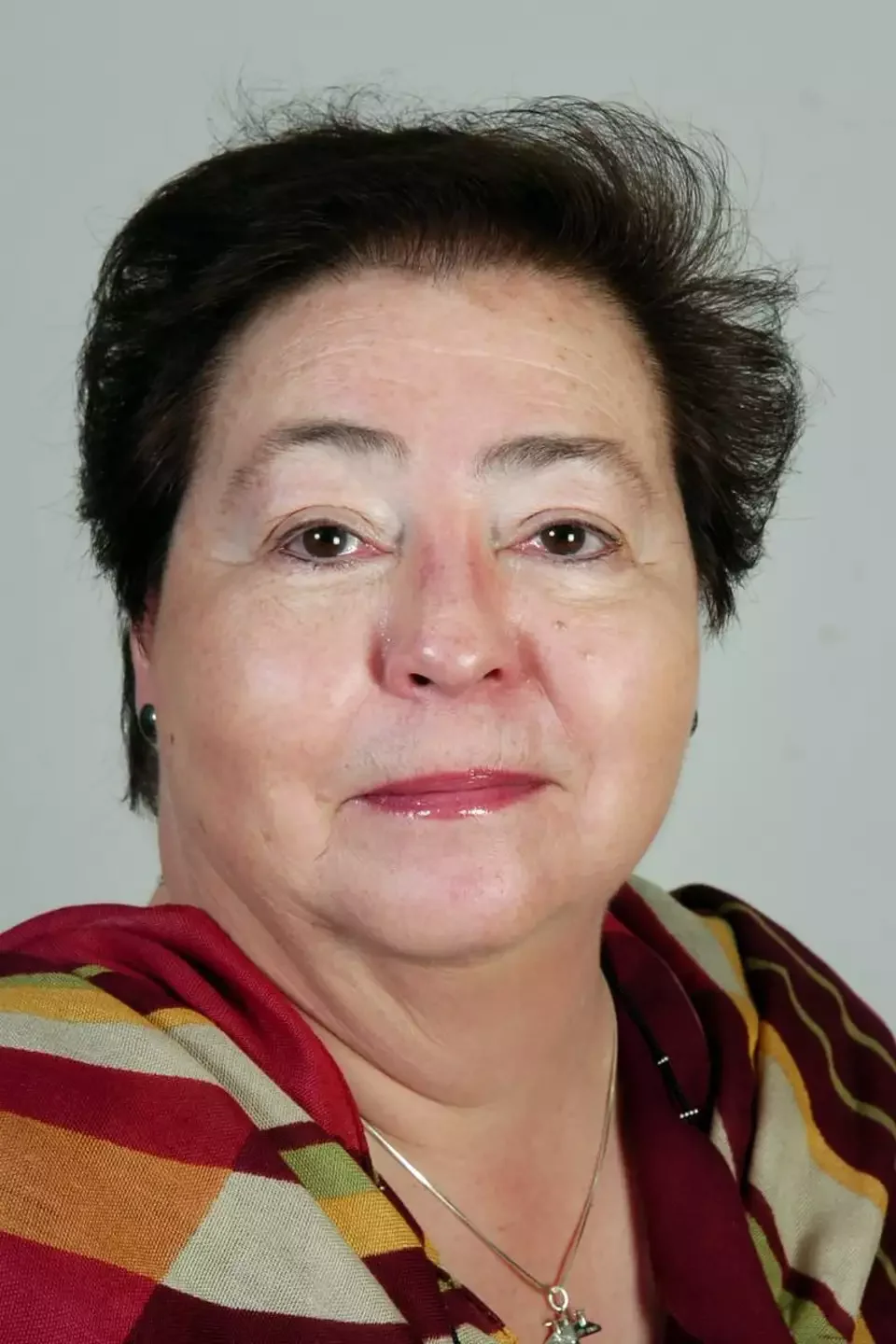
On the podium for the Oct. 4 season-opener was the orchestra’s new music director/conductor: Brazilian-born Eduardo Leandro, whose appointment was announced in March.
The “New Horizons” season will celebrate the ancient Western philosophical thought that there are five “root” elements of life: air, fire, quintessence (ideas), earth and water. Each program will have a specific theme focusing on one element. Unlike in recent years, the orchestra will use two venues; the Klein Memorial theater will host three of its five-concert season: Oct. 4 “Air”; the Dec. 20 “Quintessence” holiday event with noted Bridgeport chanteuse Maureen Hamill; and the season closer, “Water,” on April 11.
The Nov. 15 “Fire” concert and the March 14 “Earth” program will be presented at Mertens Theatre on the University of Bridgeport campus.
All events, at 7:30 p.m., will be dedicated to Fairfield philanthropists and long-time GBS supporters Doris and Herbert Harrington, who died within weeks of each other earlier this year.
Herbert and Doris Harrington
Leandro is only the sixth music director/conductor in the storied history of GBS, which from its beginning has attracted renowned conductors such as Hollywood legend Jose` Iturbi (1967-1972) and the late Gustav Meier (1972-2013), who was considered one of the world’s greatest teachers of conducting. (Leandro studied privately years ago with Meier.)
In addition to the Greater Bridgeport Symphony, Leandro’s affiliations are many: conductor of the New York New Music Ensemble, associate professor of percussion at Stony Brook University in New York and artistic director of the Contemporary Chamber Players at Stony Brook. He also performs throughout the country as a featured percussionist. (In 2024, Leandro performed on marimba with the orchestra, much to the audience’s delight.)
Leandro says he is anticipating a very exciting and special 80th season. “This will be the first season we work together with GBS as a long-term relationship. It’s a unique proposition in that we have three large concerts (at the Klein) and two chamber concerts (at Mertens Theater at U.B.), as well. So we’ll have a wide range of music, from large symphonies by Tchaikovsky and Shostakovich, to pieces that are smaller in number of players, but very exciting and challenging for the ensemble.
“We have sometimes the wrong idea that the number of musicians is proportional to how exciting a concert is. We are trying to prove this wrong, and we hope our audience gives us the chance to do just that.”
For his first year at the helm, Leandro says he has several goals in mind. “The orchestra is coming from a long [two-year] search process, and I wanted to challenge the musicians with repertoire that has a healthy mix of established known works; and very demanding, lesser-known music. It’s important for the orchestra to feel challenged with many solo parts that showcase how good these musicians are.
“For our audience, the goal of the season is to entertain them with exciting music, but also to challenge them to listen to new pieces. I want to have a permanent conversation with our community through the music we play and the way we play it.”
Perhaps the most unusual concert of the season is the April “Water” event, which promises to be fascinating. Featured will be the Water Concerto by Oscar-winner composer Tan Dun, performed as a “tour de force … by the orchestra and soloist percussionist extraordinaire Ji-Hye Jung.” As the score requires, she will use percussive instruments in, on and above large bowls of water, Leandro explains. Also on the bill is Debussy’s “La Mer” (The Sea), “one of the finest pieces of orchestration ever written.”
Leandro points out that “in contrast, the October concert featured such familiar pieces as Vaughan Williams’ “Lark Ascending,” a “haunting piece for solo violin and orchestra, played by the virtuoso Brunilda Myftaraj, after an also hauntingly beautiful and wistful piece for strings by Caroline Shaw (Grammy- and Pulitzer-prize winner who lives in Connecticut), and concluded with Shostakovich’s 5th Symphony, an ode to survival in challenging times, and a score that has one of the most elating last movements of any symphony.”
GBS is also embarking on a fund-raising campaign to sustain it and to expand its various programs for children and older students. The “80-for-80 Fund” is asking for 80 donors to give shares of $1,000 each to strengthen the organization as it enters its ninth decade in Bridgeport.
“We are currently working on expanding (the) pool of benefactors who would like to partner with us to promote both our concerts and our educational and outreach efforts,” he says.
“GBS can fulfill an indispensable role within Bridgeport and adjacent towns. We are the largest professional music institution in the area, and we have a responsibility towards our audience to educate our young population. We want them to not only come to our concerts, but to feel comfortable and have fun while they do it. For that to happen, we need to go to them first, both in schools and in after-school programs. That’s the only way to make sure we have a continuing audience who is interested in what an orchestra concert experience can feel like.” (GBS is offering family packages, with free admission for those under 19 years of age.) It is amazing that the Greater Bridgeport Symphony has persevered for decades through the region’s economic boom-and-bust cycles, he says. “The real strength of GBS is its audience and its loyalty to the orchestra.
“There would be no orchestra if the community around us didn’t want it to exist. It’s that simple. The cultural landscape is impossibly challenging for all of us at this moment, as funding for most artistic institutions is taken away overnight, and we all compete for the same scarce sources left.
“We do live in a time of uncertainty, but I have enormous faith in what this community can do. I’ve seen it.
For me being in touch with the Bridgeport community is fundamental. I don’t want to be an outsider, but rather an integral part of the music-making collective in the area. The way to make sure we continue to exist is to be indispensable to the social and cultural life of our town.”
The maestro adds that Bridgeport is unimaginable without the Greater Bridgeport Symphony. And to make certain that it doesn’t disappear, the community and orchestra must work together to ensure that “we will be here for the next 80 years.”
For information on ticket prices and programs for each concert, visit GBS.org. Cost-saving subscription tickets and full-price individual tickets are available.